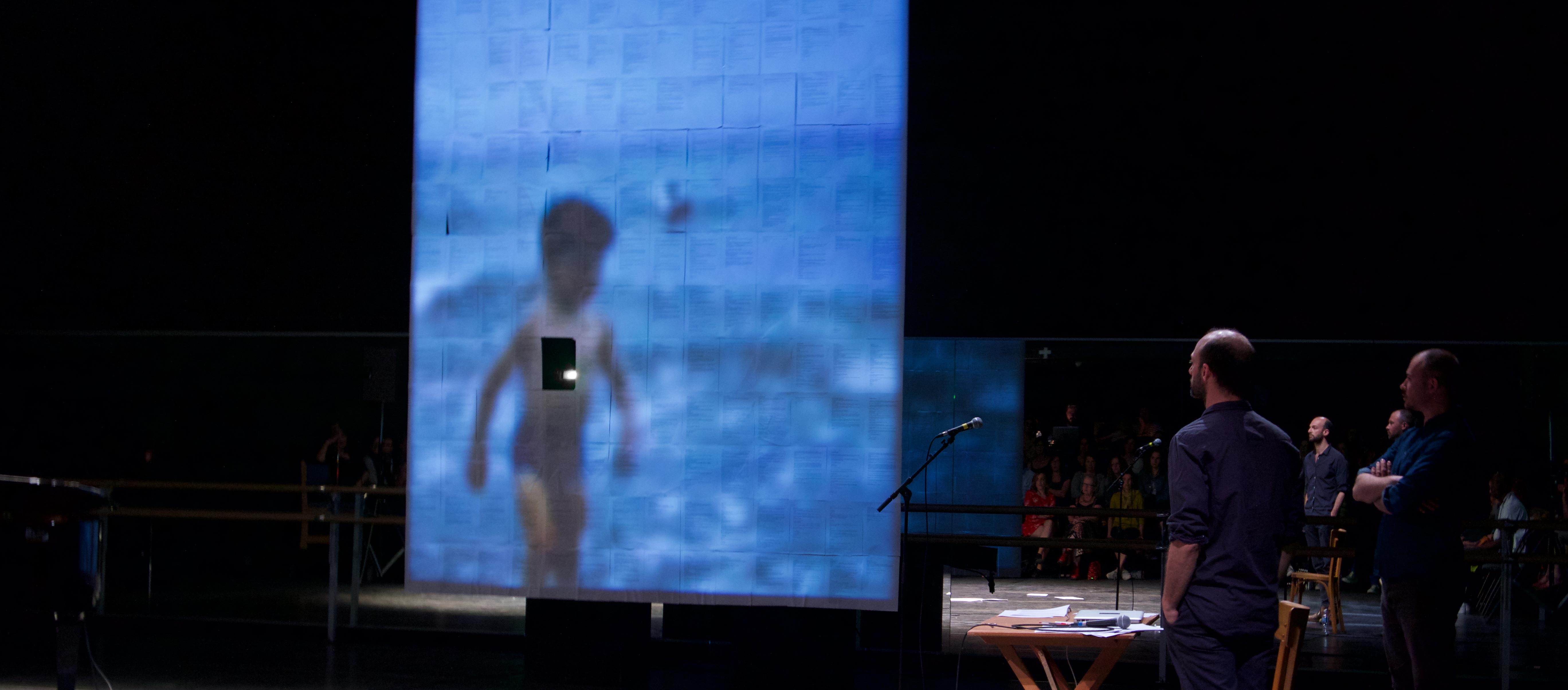
“Most of the time, the only set pieces on stage are a table, a computer, and a printer that occasionally produces other people’s letters. And the contrast between the prosaic object and this precious content is beautiful. (…)
This requires precise work from the actors, which they carried out in record time this afternoon. The rules stipulate that after spending the day meeting people and writing, at 5 p.m. the writer must select the letters to be read that evening (some from previous workshops, others from that day), build a dramatic structure, and work with his colleague to identify the stakes of each text. Perverse jubilation and the panache of defeat in a break-up letter, joyful astonishment in another, addressed to a lost mother… (…)
He lets loose the pleasure he derives from these Unwritten Letters—“the pleasure in making a community,” he underlines.
That of making yourself vanish, of disappearing into other people’s voices, while sometimes allowing their letters to lost loves to quietly resonate with his own. In the letter he wrote for Charlotte—whose breathing, right next to us in the darkness of the theater, intensified the air—we hear these words that belong as much to the young woman as to the writer: «(..) In human beings, there exists this possibility to not want to destroy each other to survive. I will grant you that it has become very rare. But it exists.”
Eve Beauvallet, Libération
“It may seem anecdotal, only Geselson’s writing makes these stories sincere, sometimes chilling. His writing pays particular attention to making the original speaker visible. Each text appears to be faithful to the story told, the personality encountered. (…)
Whether the reading is sharp, halting, restrained, suggested, or, in the case of Laure Mathis’s voice, pre-recorded, we never tire of listening. The direction and set design are understated, in service to the words. (…)
There is an abundance of stories; it is a remarkable thing to honor invisible speech. The subjects covered are nearly thematic: absence, regret, death, love, friendship, family. These are heterogeneous stories, far removed from our own, but the feelings experienced are not so foreign to us. As if they were perpetual prisoners of the overwhelming cycle of emotions.”
Thiery Lola, Théâtrothèque
“Today it is impossible to describe the slightest thing about this performance—and that is exactly the beauty of David Geselson’s wild gamble…”
La Dépêche du Midi